


Introduction
Actuators are essential components in modern industrial automation because they convert electrical, pneumatic, or hydraulic energy into controlled mechanical movement. They are widely used for operating valves, positioning equipment, controlling machinery, and automating industrial processes. As manufacturing, water treatment, oil and gas, chemical processing, power generation, and other industries continue to adopt automation, demand for reliable actuation systems has increased. India has a broad supplier base covering pneumatic, electric, hydraulic, linear, rotary, and valve actuators. Industry directories currently list suppliers across major manufacturing and industrial centers including Maharashtra, Gujarat, Tamil Nadu, Karnataka, Telangana, Delhi, and Uttar Pradesh.
Selecting suitable actuator suppliers in India requires more than comparing prices. Buyers need to consider actuator type, torque or force requirements, operating conditions, control method, materials, maintenance requirements, delivery capabilities, and technical support. The right supplier can help ensure that an actuator performs consistently within the intended application while supporting efficient operation and long-term maintenance.
Understanding Industrial Actuators
An actuator is a mechanical device designed to create movement when it receives energy from an external source. Depending on the design, the movement may be linear or rotary. Electric actuators use electrical power, while pneumatic actuators use compressed air and hydraulic actuators use pressurized fluid. These different technologies allow manufacturers to select an actuator according to speed, force, precision, environmental conditions, and available utilities.
Actuators are particularly important in automated valve systems. A valve actuator can open, close, or position a valve according to a control signal, reducing the need for manual intervention. Industrial supplier directories show a wide selection of electric, pneumatic, hydraulic, electro-pneumatic, rotary, linear, and spring-return actuator categories available in India.
Types of Actuators Available in India
Pneumatic Actuators
Pneumatic actuators use compressed air to generate mechanical movement. They are frequently used in process automation because of their relatively simple construction, fast operation, and suitability for repeated cycling. Pneumatic rotary actuators are commonly paired with quarter-turn valves such as butterfly and ball valves.
India has a substantial supplier base for pneumatic actuation products. Current industry listings identify dozens of companies supplying pneumatic actuators and related automation equipment. When choosing a pneumatic solution, buyers should consider operating pressure, required torque, air quality, cycling frequency, mounting arrangement, and available control accessories.
Electric Actuators
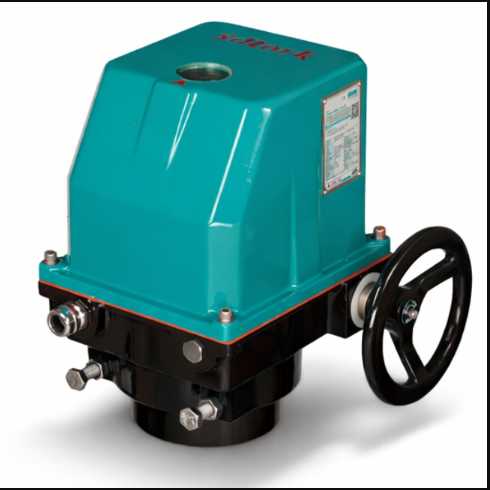
Electric actuators use motors and mechanical transmission systems to produce movement. They are suitable for applications where electrical power is readily available and accurate control or remote operation is required. Electric actuators can be used for both on-off and modulating applications, depending on their control configuration.
Electric actuator suppliers in India offer products in different torque ranges, sizes, control configurations, and mounting arrangements. Industry directories currently classify numerous Indian suppliers under electric actuator categories.Buyers should check voltage, duty cycle, output torque, enclosure protection, feedback requirements, and control-signal compatibility before purchasing.
Hydraulic Actuators
Hydraulic actuators generate movement using pressurized hydraulic fluid. They are generally selected when an application requires substantial force or torque. Heavy machinery, industrial equipment, and demanding process applications can benefit from hydraulic actuation when the appropriate hydraulic infrastructure is available.
When evaluating hydraulic actuator suppliers, customers should review pressure ratings, cylinder or rotary actuator specifications, seals, materials, operating temperature, and maintenance requirements. Proper sizing is particularly important because inadequate force capacity can affect system performance and reliability.
Linear and Rotary Actuators
Linear actuators produce movement along a straight path, while rotary actuators create rotational movement. Both categories serve different automation requirements. Linear models may be used for positioning or mechanical movement, whereas rotary models are frequently associated with valve operation and rotary machinery.
Supplier directories in India list separate categories for linear, rotary, electromechanical, electro-hydraulic, and electro-pneumatic actuators. Understanding the required motion before contacting suppliers can make product selection considerably easier.
Industrial Applications of Actuators
Actuators have applications across numerous industrial sectors. In water and wastewater treatment plants, they can automate valves controlling water flow. Chemical plants use actuated valves to manage process fluids, while power plants use actuation systems throughout steam, cooling, fuel, and auxiliary systems.
The oil and gas sector also depends heavily on automated valve systems because reliable flow control is important in many processing and transportation operations. Food and beverage, pharmaceutical, cement, steel, paper, and general manufacturing facilities similarly use actuators as part of automated production and process-control systems.
Because operating conditions differ significantly between industries, actuator suppliers in India often provide multiple product configurations rather than a single universal actuator. Buyers should therefore provide application information before requesting a quotation.
How to Select Actuator Suppliers in India
Choosing among actuator suppliers in India should begin with a clear understanding of the application. Buyers should identify the valve or machine being operated, required movement, operating environment, available power source, and expected operating frequency.
Technical specifications should then be compared carefully. For valve applications, torque is particularly important for rotary actuators, while force and stroke are critical for linear applications. Control requirements also need attention. Some systems only require open-and-close operation, whereas others need intermediate positioning and feedback.
Supplier capability is another important consideration. A supplier that provides technical assistance, sizing support, replacement parts, commissioning assistance, and after-sales service can be useful for complex industrial installations. Buyers should also evaluate manufacturing capability, quality-control procedures, documentation, lead times, and warranty terms.
Importance of Quality and Compatibility
Actuator quality directly affects the reliability of an automated system. An incorrectly sized or poorly matched actuator can result in excessive wear, inefficient operation, or difficulties during commissioning. Compatibility between the actuator, valve, control system, and mounting arrangement is therefore essential.
Before placing an order, buyers should verify important specifications such as torque, pressure, temperature range, enclosure rating, materials, mounting standard, operating time, and control method. For pneumatic systems, air pressure and air quality should also be considered. For electric systems, voltage, frequency, motor characteristics, and feedback requirements may be important.
Supplier Locations and Industrial Clusters
India’s actuator supply market is spread across several industrial regions. Mumbai and other parts of Maharashtra have a strong presence of automation and engineering companies. Gujarat, particularly Ahmedabad, is another important industrial center for valves and automation products. Suppliers can also be found in Pune, Chennai, Bengaluru, Hyderabad, Delhi, Coimbatore, and other manufacturing hubs.
This geographic diversity can benefit industrial buyers because it provides multiple sourcing options. However, geographical proximity should not be the only selection factor. Technical capability, product suitability, service infrastructure, documentation, and delivery reliability are equally important when evaluating potential suppliers.
Comparing Quotes From Different Suppliers
Price comparison is useful, but purchasing teams should avoid selecting an actuator solely because it has the lowest initial quotation. Different quotations may represent different specifications, materials, accessories, warranties, or service levels.
A proper comparison should include the complete actuator package. Buyers may need to consider mounting kits, solenoid valves, positioners, limit switches, feedback devices, control modules, air preparation equipment, or other accessories. A lower base price may not necessarily represent a lower overall procurement cost if additional components are required.
Buyers should request detailed technical datasheets and commercial quotations from several actuator suppliers in India. Comparing equivalent specifications makes it easier to understand the actual cost and technical value of each proposal.
Role of Automation in Modern Industry
Industrial automation is increasingly focused on improving process consistency, monitoring, efficiency, and remote control. Actuators form an important connection between automated control systems and physical equipment. A controller can issue a command, while the actuator converts that command into mechanical movement.
Smart actuator technologies can also support monitoring and feedback. Depending on the product, systems may provide position information, diagnostic data, communication capabilities, or condition-monitoring features. These capabilities can help operators understand equipment status and identify potential maintenance requirements.
As industrial facilities modernize their control systems, the relationship between actuators, valves, sensors, controllers, and industrial communication networks is becoming increasingly important.
Maintenance Considerations
Regular maintenance can help extend actuator service life and reduce unexpected interruptions. Maintenance requirements depend on the actuator technology and operating environment. Pneumatic systems may require attention to air quality, seals, connections, and lubrication requirements, while electric actuators may require inspection of electrical connections, mechanical components, and feedback systems.
Hydraulic systems require appropriate fluid management and inspection of seals, hoses, and connections. Regardless of actuator type, operators should follow the manufacturer’s maintenance recommendations and maintain appropriate records.
A supplier with accessible spare parts and technical assistance can make maintenance easier. This is particularly important for production facilities where equipment downtime can have significant operational consequences.
Future of the Indian Actuator Market
The Indian industrial sector is continuing to adopt automation across manufacturing, infrastructure, utilities, and process industries. This creates opportunities for actuator manufacturers, distributors, system integrators, and automation service providers.
The actuator market is also becoming more diverse. Conventional pneumatic and electric products continue to serve established applications, while smart and digitally connected actuation systems are increasingly relevant to modern automation. Supplier directories already show a wide range of actuator technologies available in India, including electric, pneumatic, hydraulic, electromechanical, electro-pneumatic, and linear products.
For businesses planning automation upgrades, this expanding product range makes application-specific selection increasingly important. Instead of choosing an actuator based only on size or price, engineering teams can evaluate the complete operating requirements and expected lifecycle performance.
Conclusion
The market for actuator suppliers in India includes manufacturers, distributors, exporters, and automation specialists serving a wide variety of industries. Pneumatic, electric, hydraulic, linear, and rotary actuators are available for applications ranging from valve automation to sophisticated industrial machinery. Current supplier directories demonstrate the breadth of India’s actuator ecosystem and the presence of companies across several major industrial regions.
For successful procurement, businesses should focus on correct sizing, application compatibility, quality, technical support, availability of spare parts, and long-term service requirements. Comparing detailed technical and commercial proposals from multiple actuator suppliers in India can help buyers identify solutions that align with their specific operational requirements. As automation continues to expand across Indian industries, dependable actuation technology will remain an important part of efficient and controlled industrial processes.